Finance application architecture is not just about processing payments. The real challenge is creating systems that handle money, dates, transactions, reports, webhooks, and payouts consistently so that small mistakes do not grow into expensive reliability problems later.
I often find that many developers can build products, orders, and dashboards without much difficulty. The challenge starts when money enters the picture. Suddenly, rounding issues appear, reports disagree with each other, payouts become difficult to audit, and background jobs compete for resources.
The good news is that many of these problems come from architecture decisions rather than technical complexity. A few careful choices early in a project can make financial systems much easier to maintain and trust.
Takeaways
- Store money as integer cent values rather than floating-point numbers.
- Use dedicated value objects for money, percentages, and date ranges to improve consistency.
- Treat transactions as permanent historical records rather than temporary calculations.
- Separate critical background jobs from lower-priority work using multiple queues.
- Design reports, webhooks, and payouts around transaction history as the system’s source of truth.
The Core Components of a Finance Platform
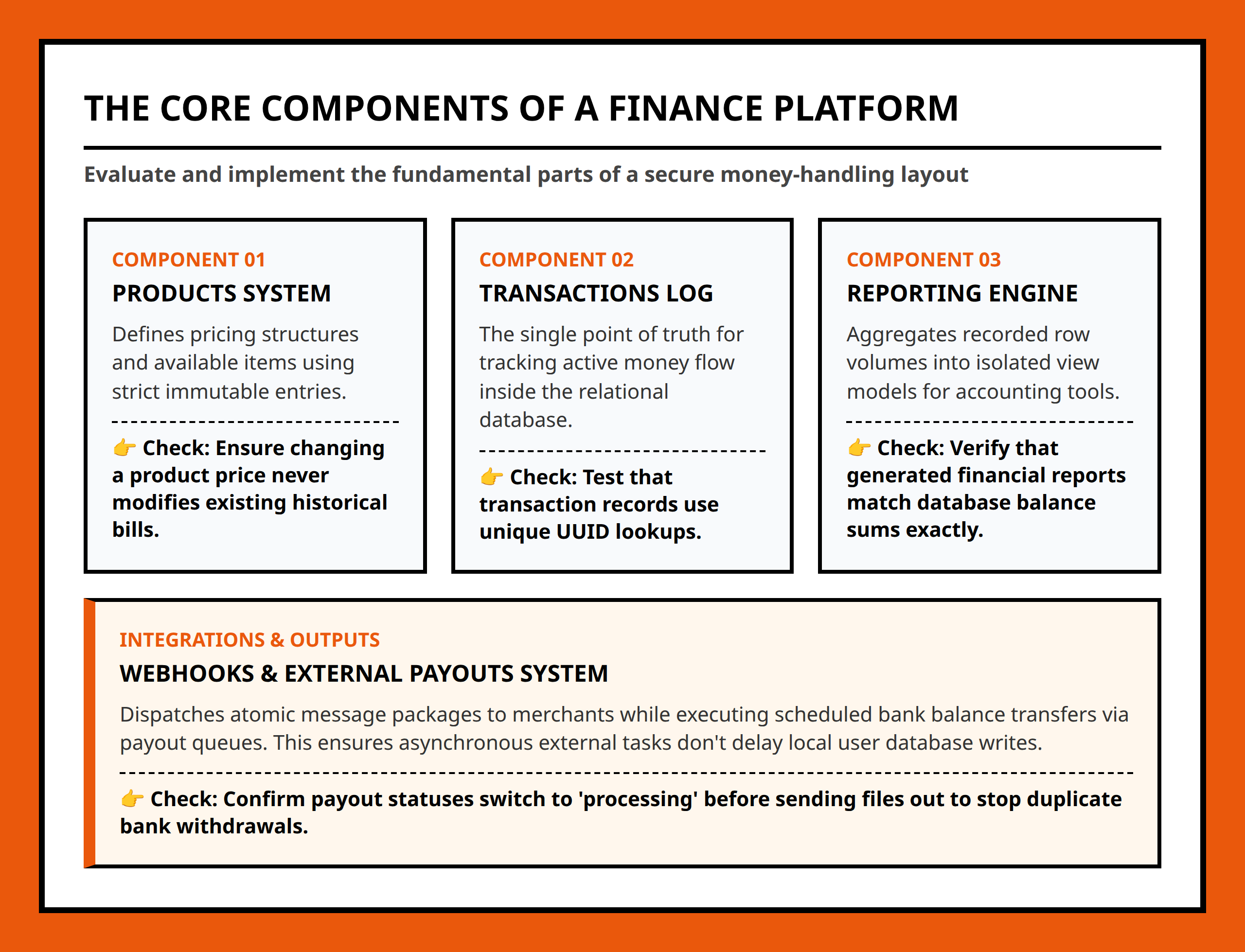
A reliable finance platform is built around a simple but important flow. Products are offered for sale, customers create transactions by purchasing those products, reports summarize the resulting activity, webhooks notify external systems, and payouts distribute earnings.
These components may look independent at first, but they are tightly connected. A transaction is usually the central event. When a customer purchases a product, the transaction captures the details of that sale. Reporting systems use those records to calculate revenue. Payout systems use them to determine earnings. Webhooks use them to notify other services about what happened.
A useful way to think about the architecture is as a chain of trust:
| Component | Primary Responsibility |
|---|---|
| Products | Define what customers can purchase |
| Transactions | Record completed purchases |
| Reports | Summarize historical activity |
| Webhooks | Notify external systems about events |
| Payouts | Distribute earnings based on transaction history |
If the transaction layer becomes unreliable, every downstream feature becomes unreliable as well.
Reliability-First Design Principles
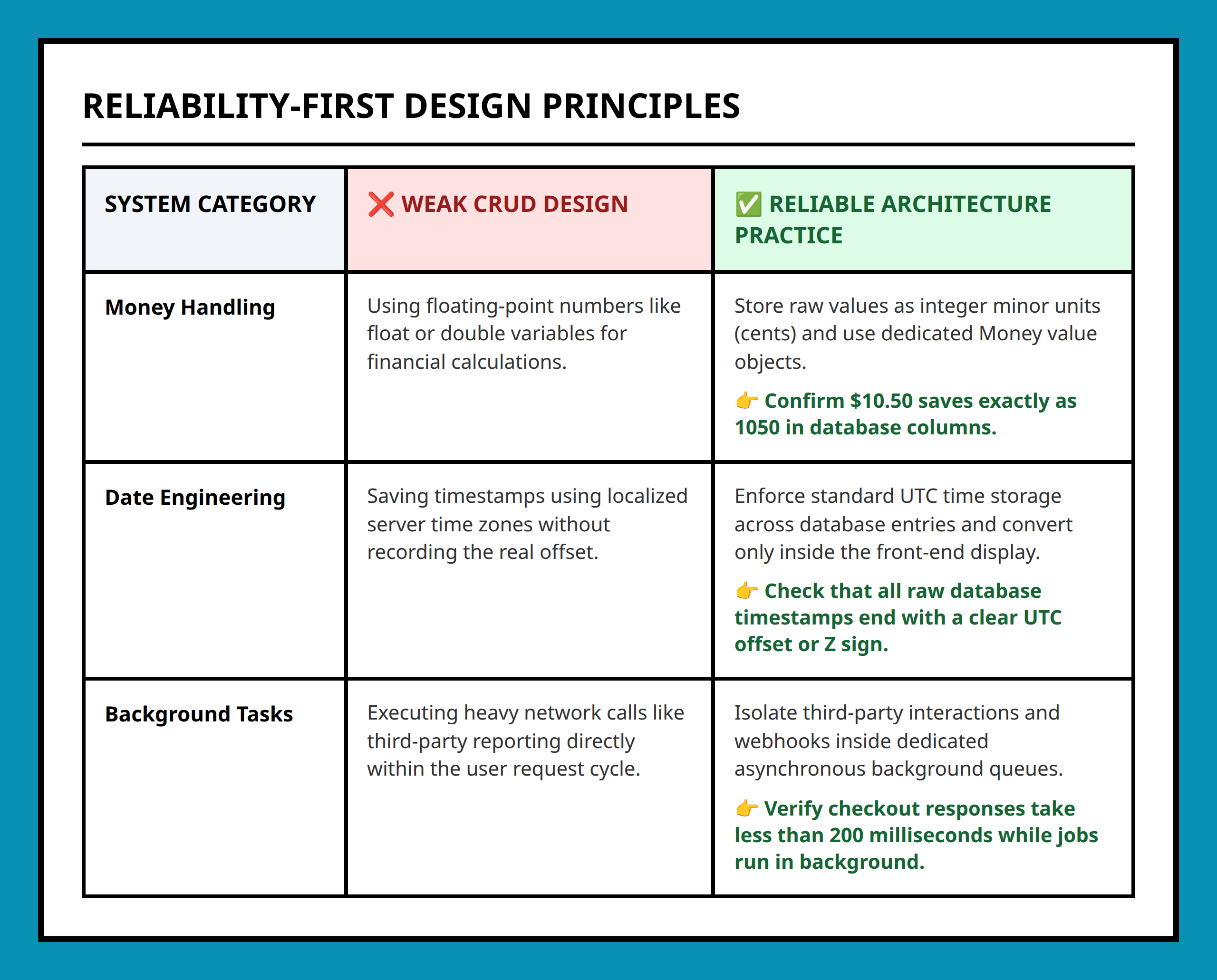
The most important architecture decisions in a financial application are often the least visible to users.
Money handling comes first. Storing monetary values as decimal numbers may appear convenient, but financial calculations become much safer when values are stored as integer cent amounts. Instead of storing 39.00 as a decimal, storing 3900 as cents eliminates many rounding and precision problems.
Another valuable practice is representing money through dedicated value objects rather than treating it as a primitive number. When money becomes its own type, calculations become more explicit and easier to reason about.
Date consistency matters just as much. Reporting systems often become messy when one part of the application uses date objects, another uses strings, and a third uses timestamps. A dedicated date interval model creates a single definition for reporting periods and removes ambiguity.
Error awareness should be built into the design. Financial systems must assume that requests can fail, external services can become unavailable, and jobs can be delayed. Reliability is rarely achieved by preventing every failure. It comes from designing systems that can recover when failures happen.
Consider a simple reporting example. If one report defines a day as midnight-to-midnight while another defines it differently, revenue numbers can disagree even when both queries appear correct. Consistent date handling prevents these subtle problems.
How Transactions, Webhooks, Reports, and Payouts Work Together
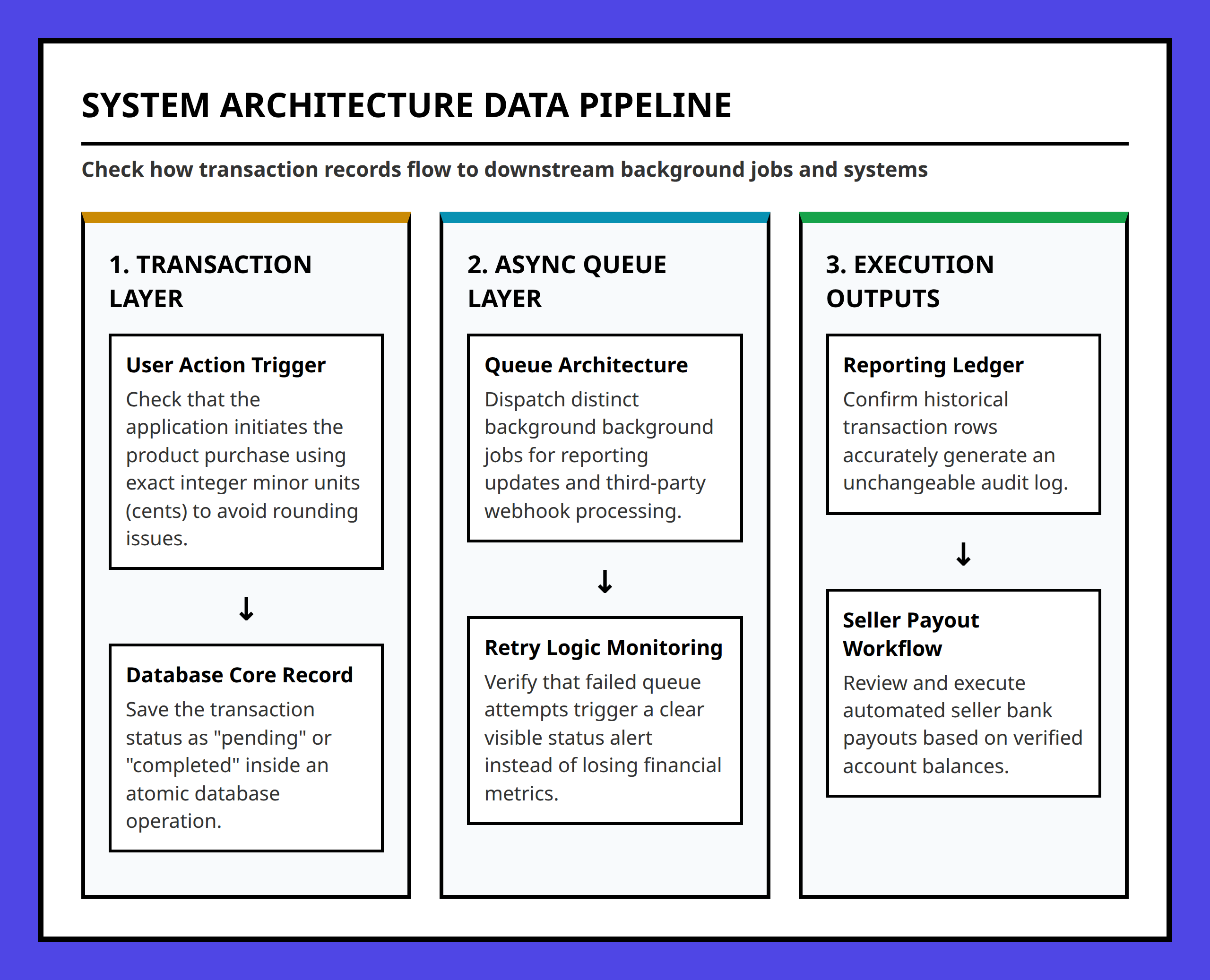
The transaction lifecycle illustrates why architecture matters so much.
A customer purchases a product. The application calculates the total amount, determines fees and taxes, and creates a transaction record. That transaction becomes a historical snapshot of the sale.
An important detail is preserving transaction history. Product information can change over time. A product that costs one amount today may cost something different later. By storing relevant product information inside the transaction record itself, the system preserves the original state of the sale.
Once the transaction exists, additional processes can begin.
- Reports can calculate revenue and earnings.
- Webhooks can notify external services about the transaction.
- Payout systems can include the transaction in future earnings distributions.
This creates a dependable flow where every downstream feature relies on recorded transaction history instead of recalculating the past from changing data.
Background processing becomes especially important here. Sending webhooks, generating exports, cleaning old files, and issuing payouts are all tasks that do not need to block the user’s purchase experience.
Using multiple queues allows critical work to receive higher priority. For example, payout processing should not wait behind thousands of notification jobs or webhook requests. Separating workloads by importance improves both responsiveness and operational reliability.
Building Around Historical Truth Instead of Current State
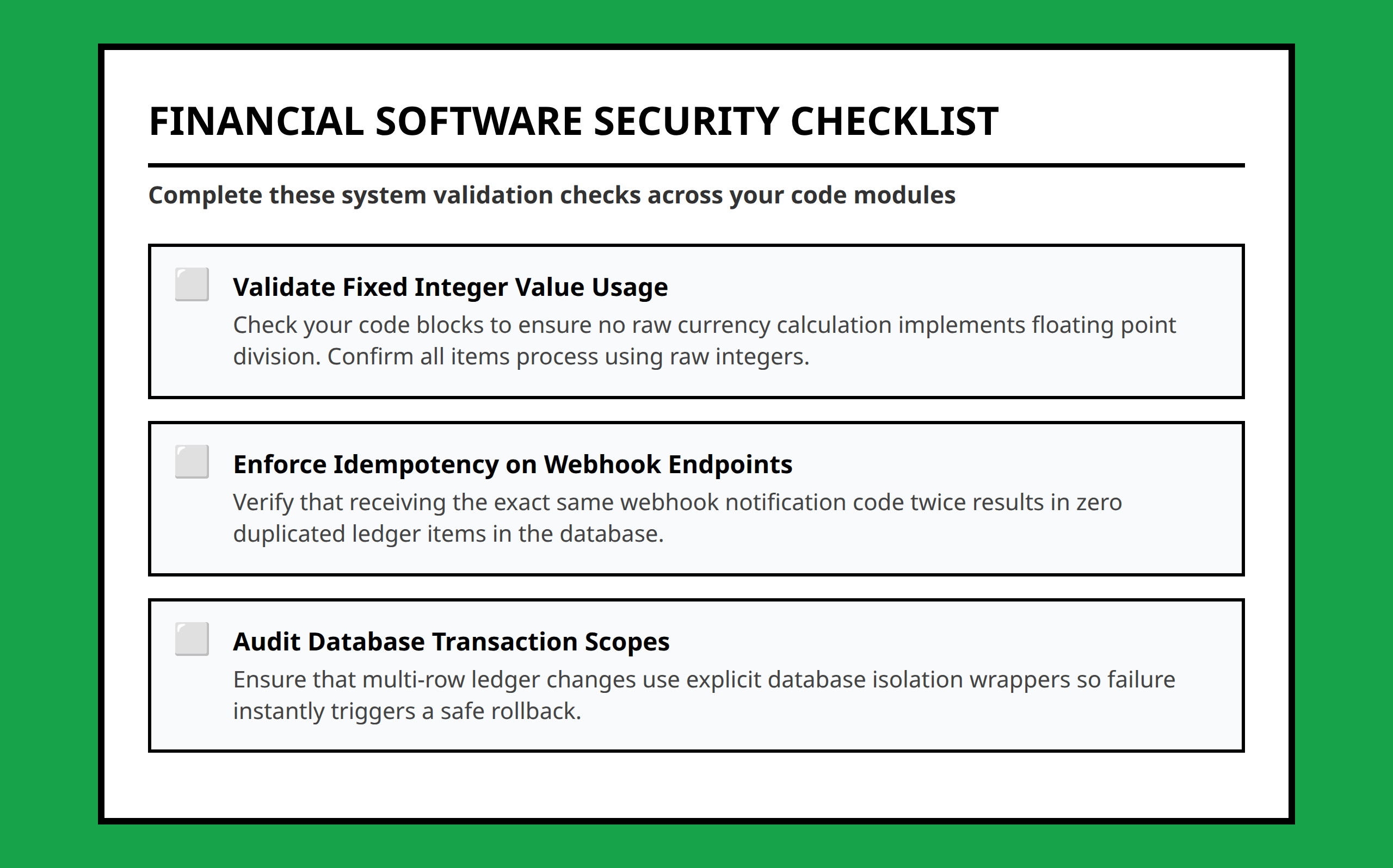
One lesson appears repeatedly in financial software: current data is not always the truth.
A report describing last month’s revenue should reflect what happened last month, not what product prices happen to be today. The architecture should therefore preserve historical facts whenever a transaction occurs.
That principle affects more than reporting. It also influences audits, payouts, troubleshooting, and customer support. When questions arise months later, the system should be able to reconstruct exactly what happened using stored transaction data.
In practice, this often means keeping transaction-specific copies of important information rather than relying entirely on related records that may change over time.
Why Queue Architecture Matters More Than Many Teams Expect

Many applications start with a single queue. That approach can work initially, but financial systems frequently contain jobs with very different priorities.
A webhook request, a notification, an export operation, and a payout process do not have the same business impact.
If all of them share the same queue, critical operations can become delayed behind less important work. A better architecture assigns important financial operations their own processing path.
This approach improves predictability. It also reduces the risk that urgent financial tasks will be delayed during periods of heavy system activity.
FAQ
The Practical Lesson
The strongest finance application architectures focus on consistency before features. Money values are handled predictably. Dates follow shared rules. Transactions become permanent historical records. Background jobs are prioritized according to business importance.
Before adding new functionality, examine how your application stores money, defines reporting periods, records transactions, and processes background work. Those decisions often determine whether the system remains reliable as it grows.
- Transaction: A permanent record of a completed financial event, such as a customer purchase.
- Value Object: A dedicated object used to represent a specific type of value, such as money or percentages, with consistent behavior.
- Webhook: An automated HTTP request sent to another system when a specific event occurs.
- Payout: A transfer of earned funds to a seller or account holder based on recorded transactions.
- Queue: A background processing system that executes tasks outside the main user request.
- Date Interval: A structured representation of a reporting period with defined start and end boundaries.
