Multiple queue architecture helps financial applications stay reliable by ensuring critical operations such as payouts and transaction processing are not delayed by lower-priority background work. Separating workloads by importance creates faster responses, more predictable processing, and fewer operational bottlenecks.
Many applications begin with a single queue. It is simple to set up, easy to understand, and often works well during the early stages of a project.
The trouble starts when very different types of work begin competing for the same processing resources. A payout job, a webhook delivery, a notification, and a large export request may all enter the same queue even though they have very different levels of business importance.
When that happens, critical financial operations can end up waiting behind routine background tasks.
Takeaways
- Not all background jobs deserve the same priority.
- Payouts and transaction-related processing should be protected from queue congestion.
- Separate critical financial workloads into dedicated queues.
- Queue prioritization improves both reliability and responsiveness.
- Monitoring queue health is as important as designing queue structure.
The Hidden Cost of a Single Queue
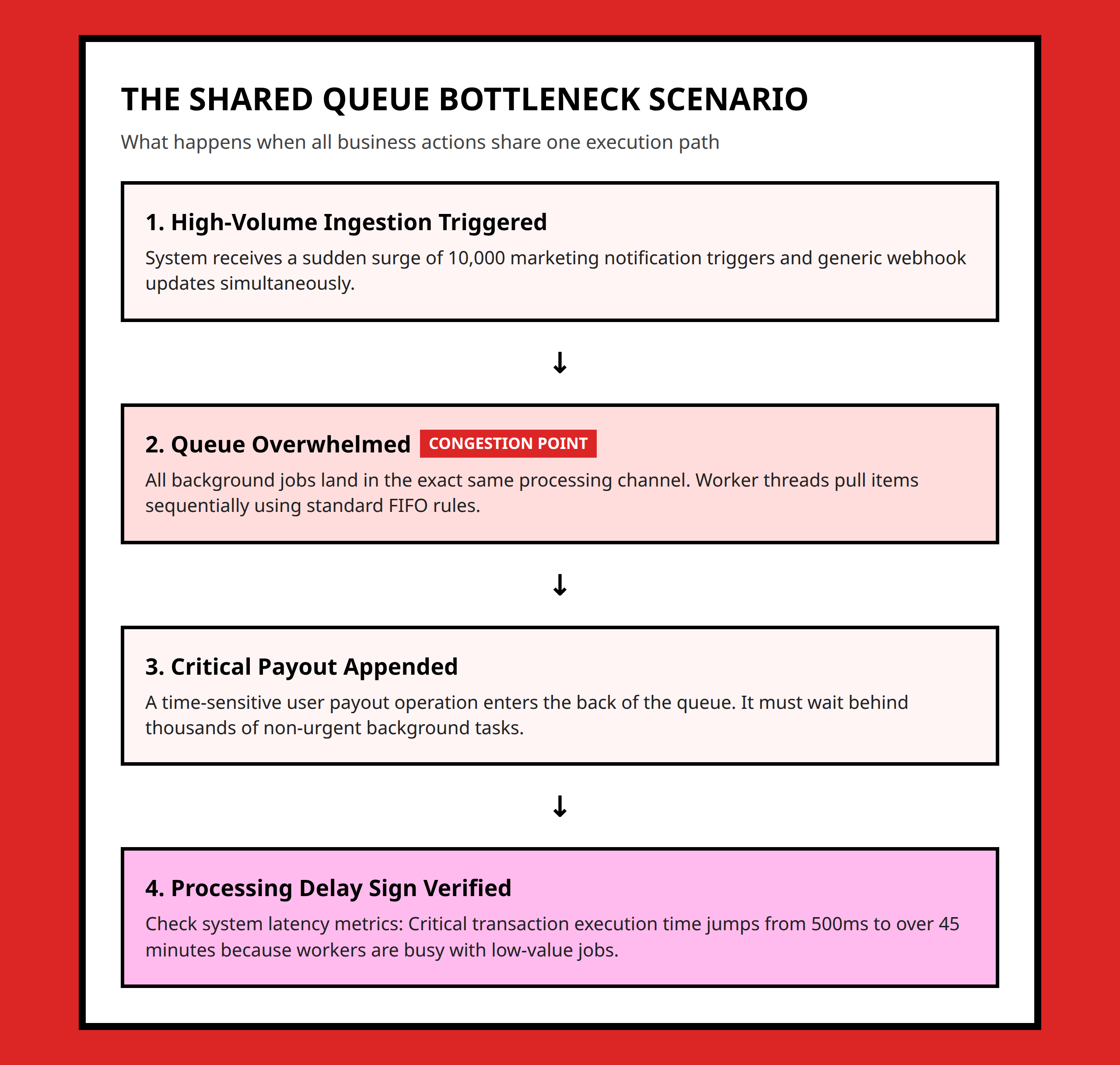
The main problem with a single queue is that every job competes for the same processing capacity.
At first, this may not seem like a concern. But as applications grow, background work becomes more diverse. Notification jobs, webhook deliveries, reporting tasks, exports, and financial processing can all accumulate simultaneously.
When every task shares the same queue, delays in one category can affect everything else.
Imagine a period of heavy activity where thousands of notification jobs are generated. If payout processing shares that same queue, important financial operations may be forced to wait behind work that is far less critical to the business.
The result is not merely slower processing. It is reduced predictability. Teams can no longer confidently estimate when critical jobs will complete.
Categorizing Background Jobs by Business Importance
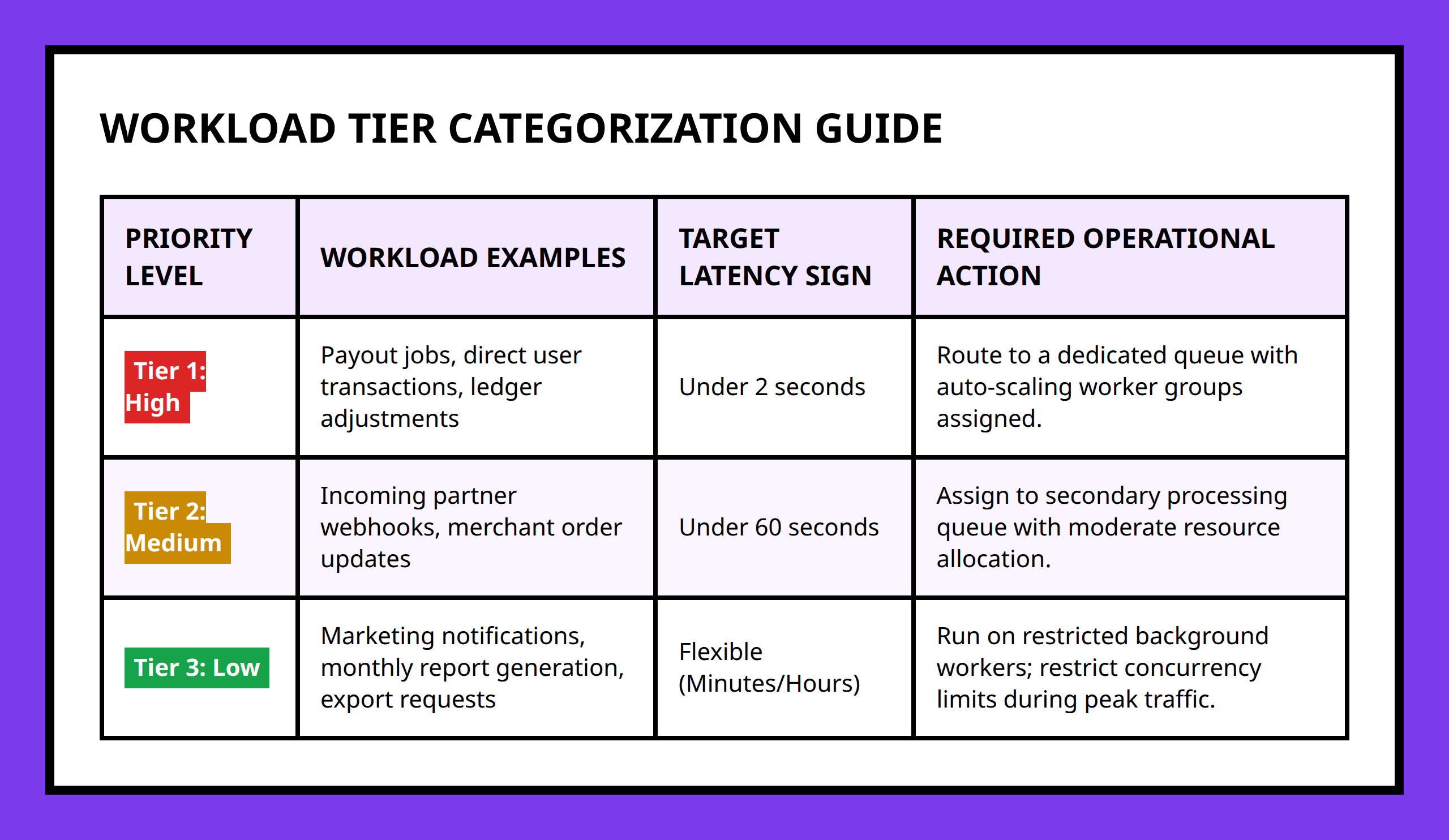
The most effective queue designs begin by recognizing that different jobs have different consequences when delayed.
Some workloads directly affect financial operations. Others improve the user experience but are less time-sensitive.
A useful way to evaluate background jobs is by asking a simple question: what happens if this job is delayed?
| Job Category | Impact of Delay |
|---|---|
| Payout Processing | Direct effect on financial operations |
| Transaction-Related Processing | Can affect business workflows and reporting |
| Webhook Delivery | May delay communication with external systems |
| Notifications | Usually lower operational impact |
This type of categorization helps determine which workloads deserve dedicated processing capacity and which can safely share resources.
Designing a Multi-Queue Strategy
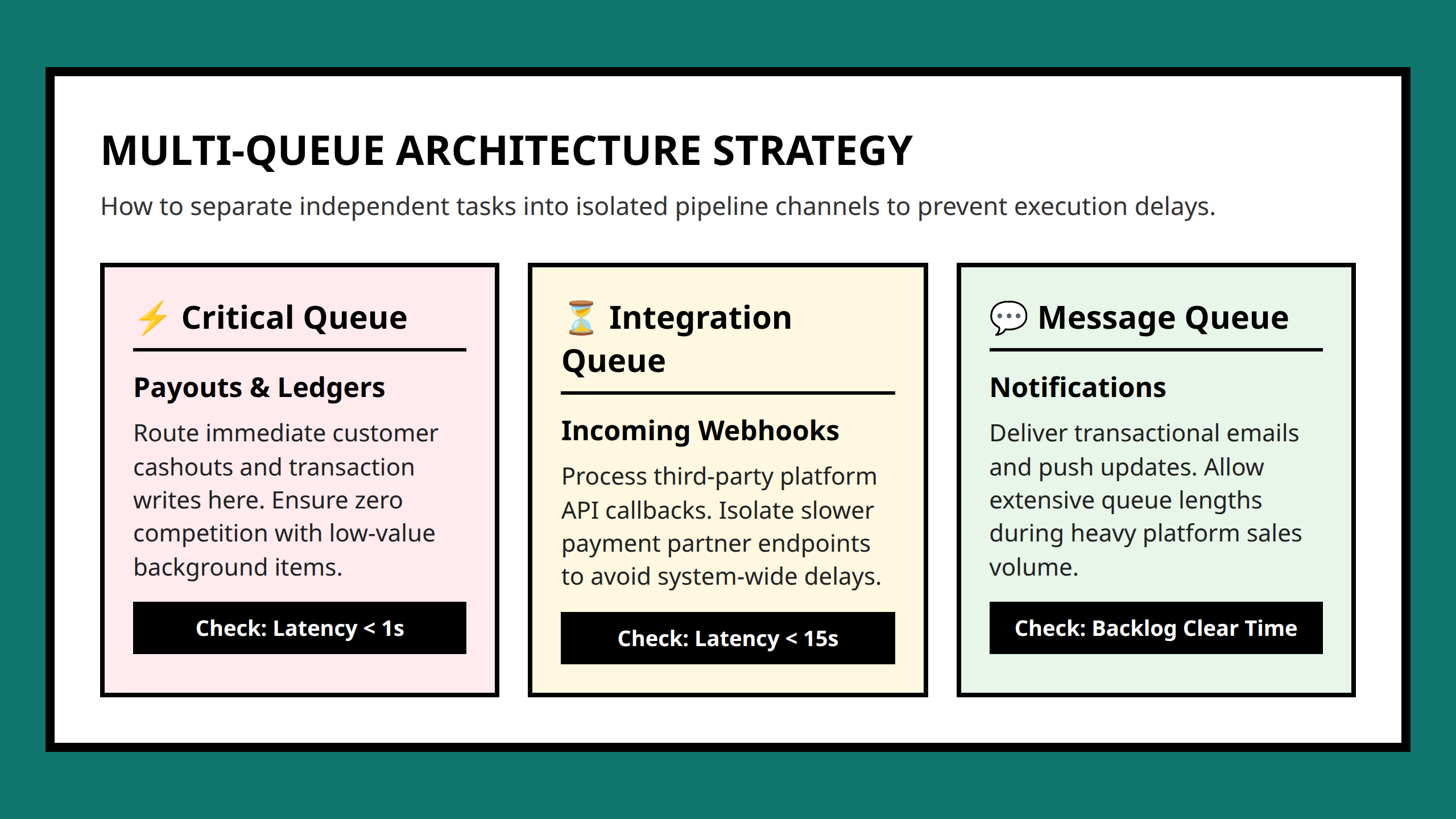
The purpose of multiple queues is not complexity. The purpose is protection.
By separating workloads into different queues, important jobs avoid competing with less critical tasks.
A practical strategy often involves assigning mission-critical financial operations their own queue while grouping lower-priority work separately.
For example, payout jobs can run independently from notification processing. Webhook delivery can operate in its own queue without affecting transaction-related tasks. Each workload receives resources appropriate to its importance.
This separation creates more predictable system behavior during periods of heavy demand.
I find that one of the easiest ways to identify queue design problems is to look for situations where business-critical jobs can be delayed by convenience-focused jobs. When that possibility exists, workload separation usually deserves serious consideration.
Monitoring and Maintaining Queue Reliability
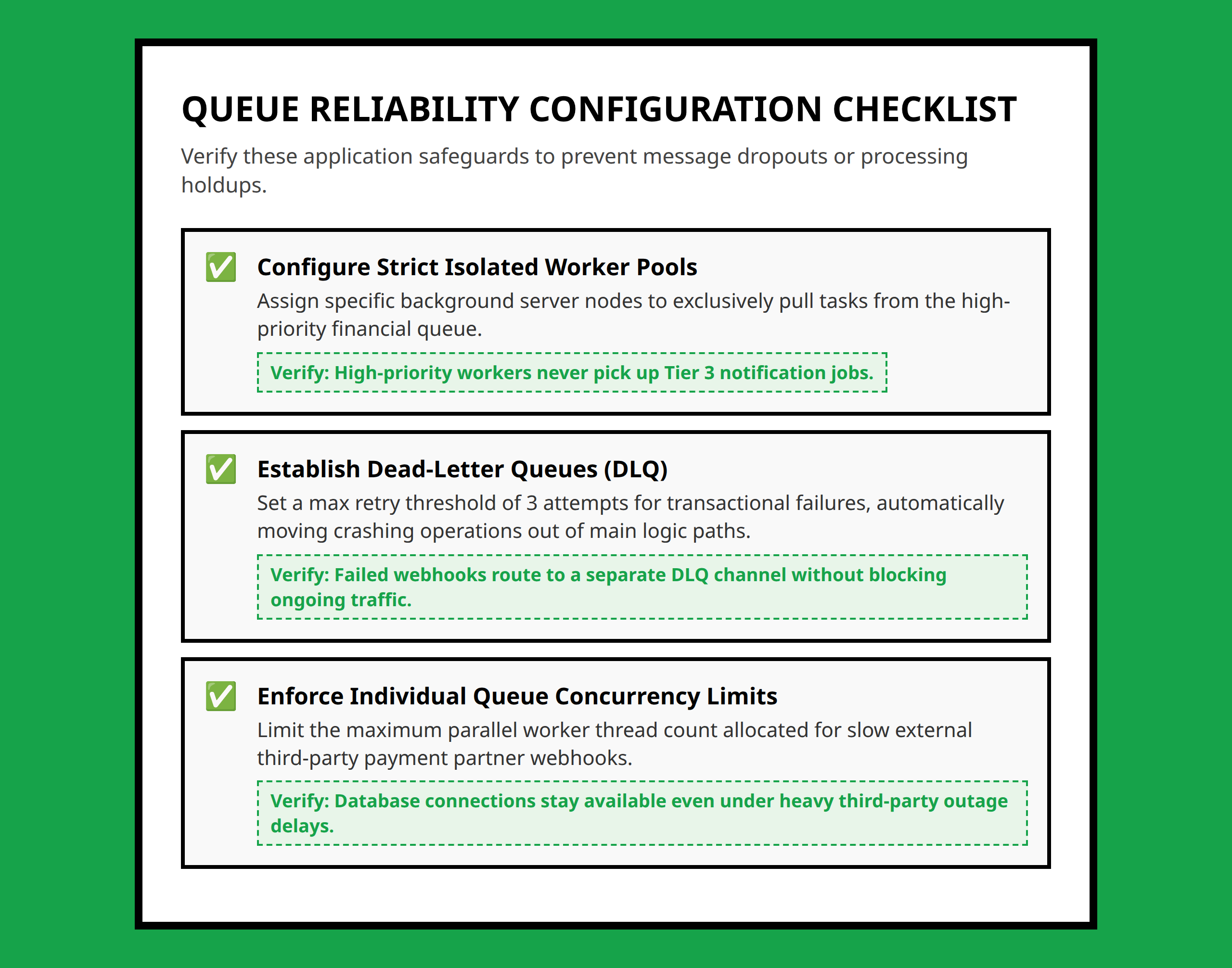
Creating multiple queues is only the first step. Reliability also depends on visibility.
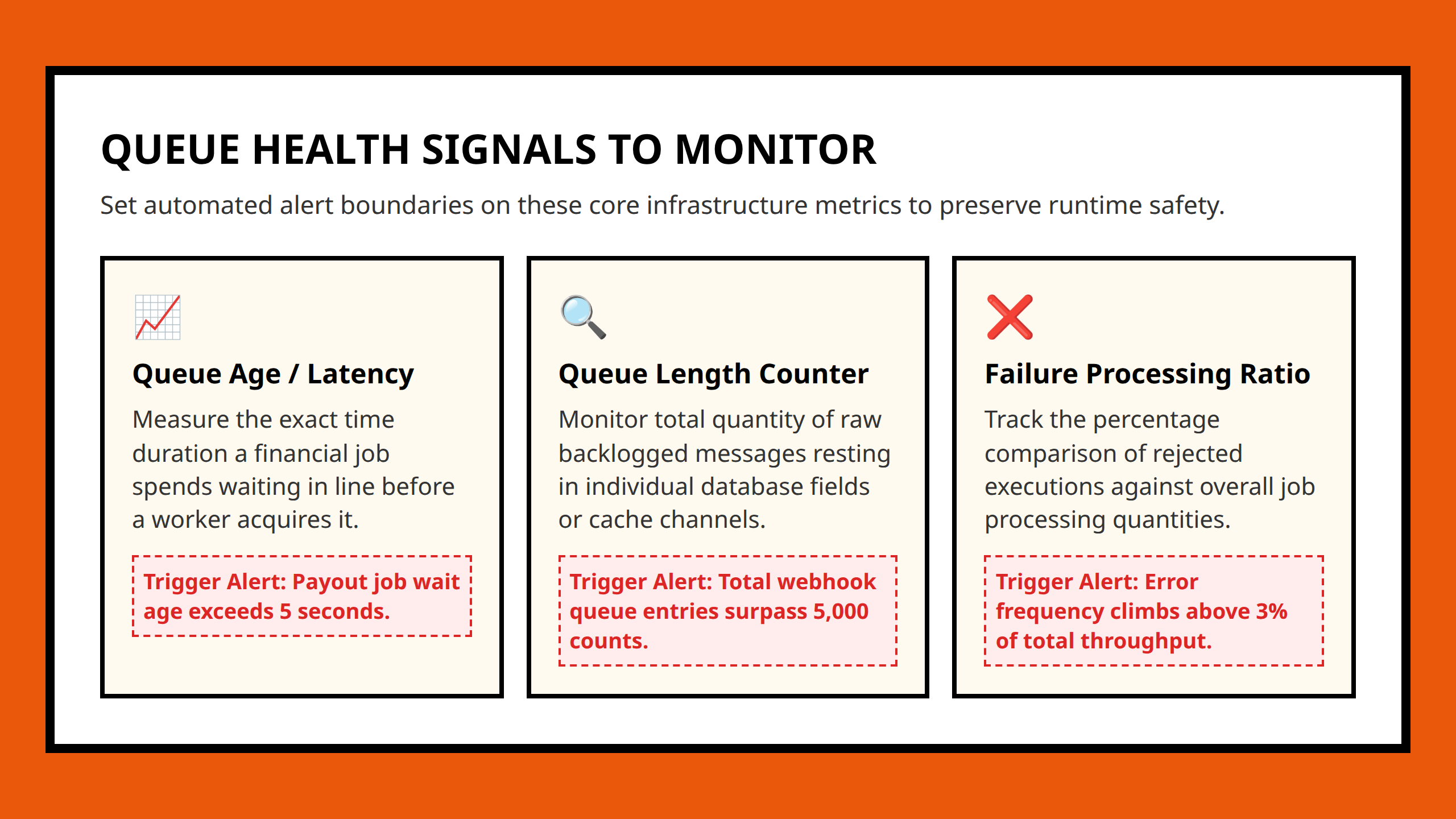
Each queue should be monitored independently so bottlenecks can be identified before they become operational problems.
A queue that consistently grows faster than it is processed may indicate insufficient resources, unexpected workload patterns, or a need for further prioritization.
Monitoring becomes especially important in financial systems because delayed processing can affect reporting, payouts, external integrations, and customer expectations.
The goal is not simply to process jobs. The goal is to ensure that the right jobs are processed at the right time.
Queue Design Is Really About Business Priorities
Queue architecture often appears to be a technical decision, but it is really a business decision disguised as infrastructure.
Every queue configuration reflects what the system considers most important. When critical financial operations receive dedicated processing resources, the architecture communicates those priorities clearly.
A useful next step is to review your current background jobs and ask which ones would create real business problems if delayed for an hour. Those workloads are often the strongest candidates for dedicated queues.
FAQ

- Queue: A background processing system that executes tasks outside the main user request cycle.
- Multiple Queue Architecture: A design approach that separates different types of workloads into dedicated processing queues.
- Background Job: A task that runs asynchronously rather than during an immediate user request.
- Webhook: An automated request sent to another system when a specific event occurs.
- Payout Processing: The workflow responsible for distributing earned funds based on recorded financial activity.
- Queue Prioritization: The practice of assigning processing resources according to the importance of different workloads.
